
Withdrawal troubleshooting · Evidence · Complaints · ADR
Casino Withdrawal Pending or Unpaid: What to Do
A withdrawal can be delayed for very different reasons. It may still be waiting for operator review, paused for KYC, rejected back to the casino balance, approved but not yet sent, or already transmitted to a bank, e-wallet or blockchain network. The correct next step depends on that stage.
This guide explains how to identify the status, preserve evidence, make a formal complaint and use the ADR or regulatory route that applies to the casino’s licence.
CasinoOfficialSite does not mediate disputes, accept KYC documents or recover funds. Do not send passports, bank statements, wallet seed phrases or other sensitive documents to us. Use the casino’s official complaint process and the independent dispute-resolution channel named by the operator or regulator.
Start with the transaction stage
Is Your Casino Withdrawal Pending, Rejected, Approved or Sent?
Start with the status shown in the cashier or transaction history. A withdrawal that is still inside the casino is a different problem from a payment that the operator has already sent to an external provider or blockchain.
| Status | What it usually means | What to check next |
|---|---|---|
| Requested | The withdrawal has been submitted but may not yet have entered review. | Save the request ID, amount, method and timestamp. |
| Pending / Under Review | The operator is still processing the request or checking the account. | Compare the elapsed time with the casino’s published processing period and check for messages or verification requests. |
| KYC / Verification Required | The withdrawal is waiting for identity, address, payment-method or another compliance check. | Read the exact request inside the account or official support channel and submit documents only through the casino’s approved route. |
| Rejected / Returned | The withdrawal was not released and the funds may have returned to the casino balance. | Request the specific reason in writing and check the account, bonus and payment rules that the operator cites. |
| Approved | The operator has accepted the request, but external payment may not yet be complete. | Ask whether the funds have actually been sent and request a payment reference where available. |
| Sent / Processed | The operator says the payment has left its system. | Check the bank, e-wallet or blockchain reference. For crypto, request the transaction hash if it is not visible. |
| Received | The payment reached the destination. | Keep the transaction record until the account history and receiving balance are reconciled. |
The wording is not identical at every casino. “Processed”, for example, can mean an operator-side stage rather than confirmed receipt in the destination account. If the status is unclear, ask support one specific question: Has the withdrawal left the casino, and is there an external payment reference or transaction ID?
Our separate casino payment methods and withdrawals guide explains how minimums, fees, KYC and payment processing work before a problem occurs.
Account review, bonus rules and external rails
Why Casino Withdrawals Get Delayed
A delay is not automatically evidence of non-payment. The cause can sit inside the casino account, in a promotion, at the payment provider or on the receiving network.
KYC, Payment Ownership and Account Review
Verification is one of the most common reasons a withdrawal stops moving. The operator may need identity and address documents, confirmation that a card or wallet belongs to the account holder, or additional source-of-funds information where its compliance process requires it.
For identity, proof-of-address, wallet ownership and source-of-funds requests, use Casino KYC Verification to identify the outstanding check.
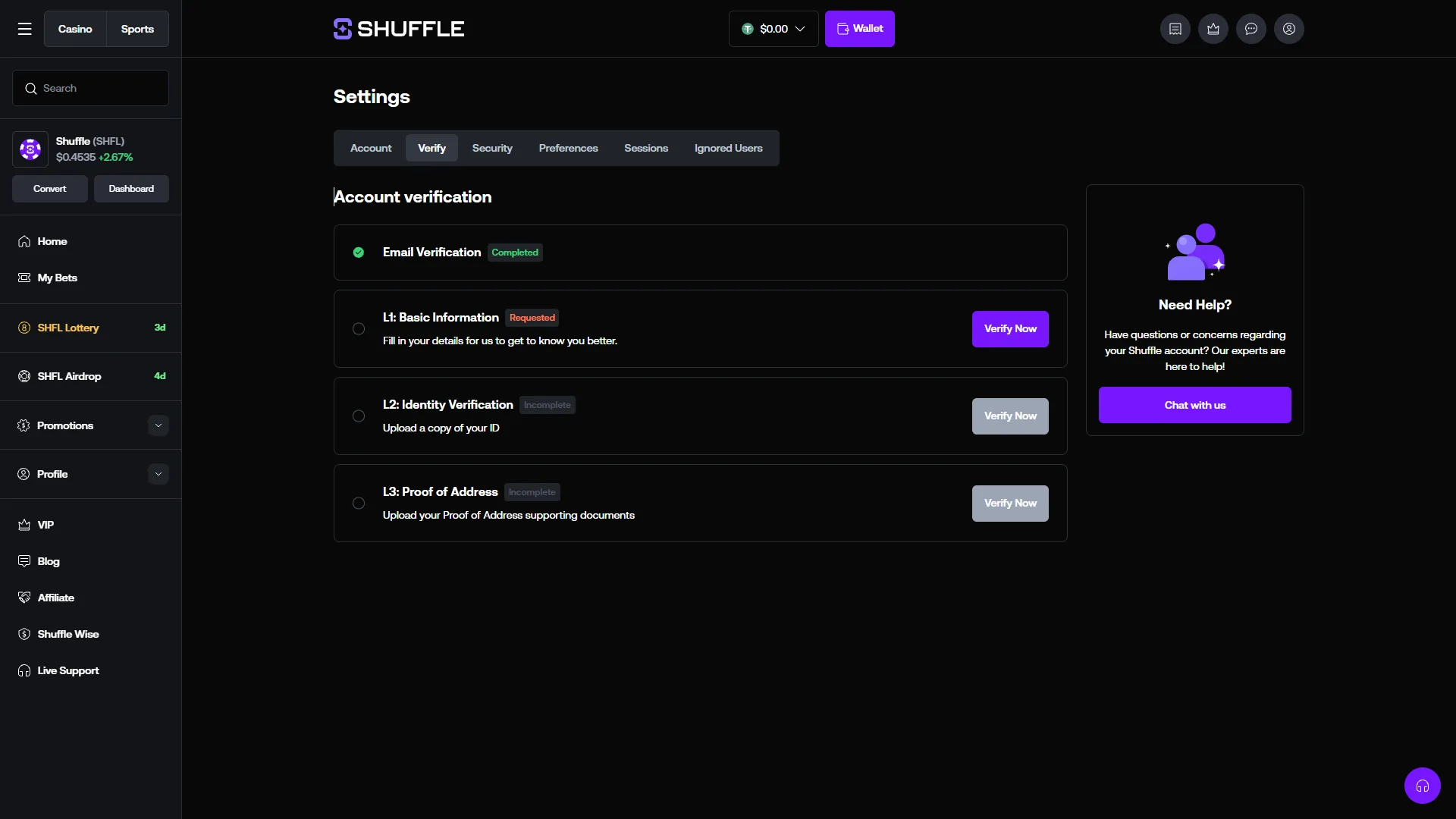
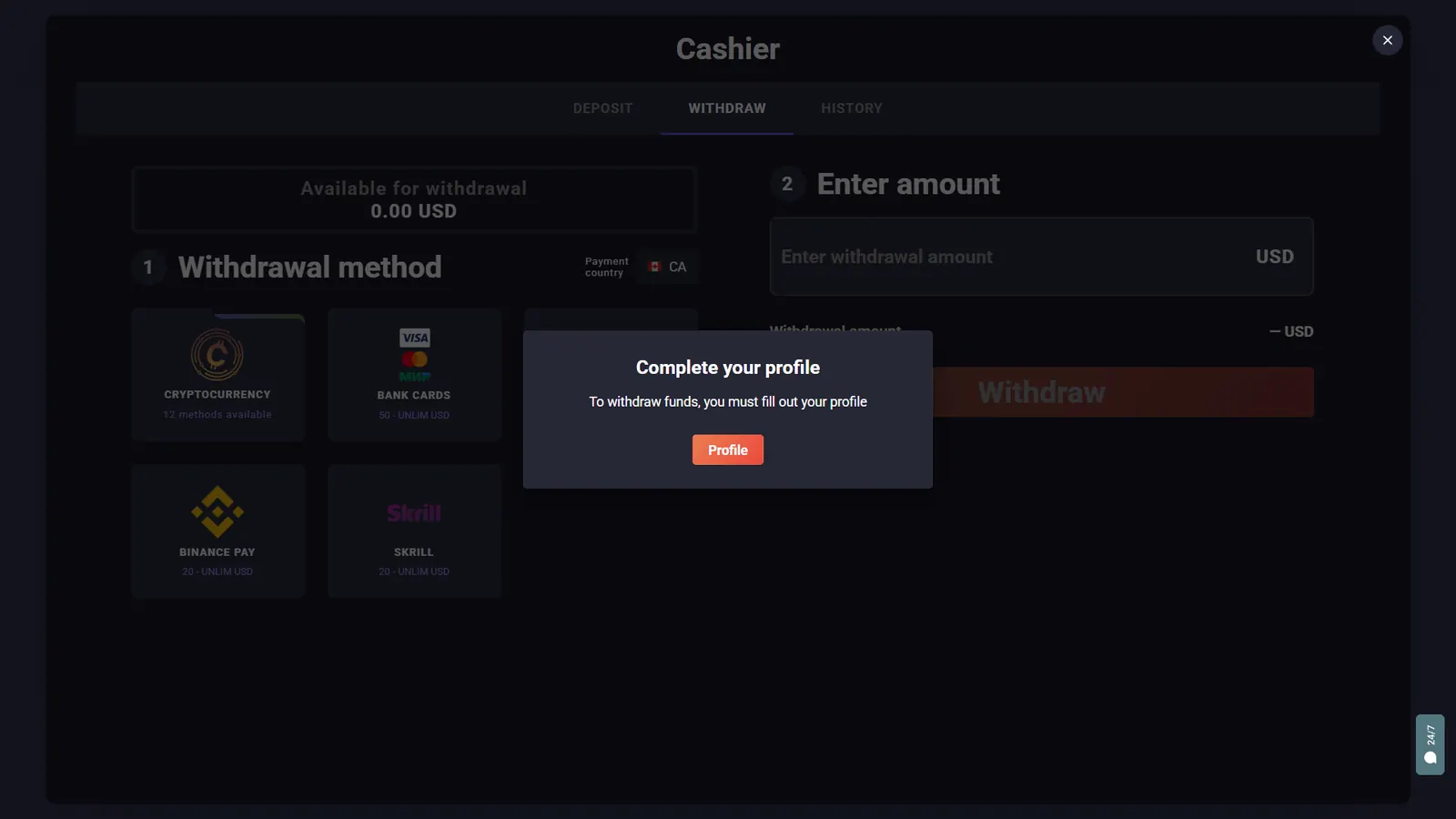
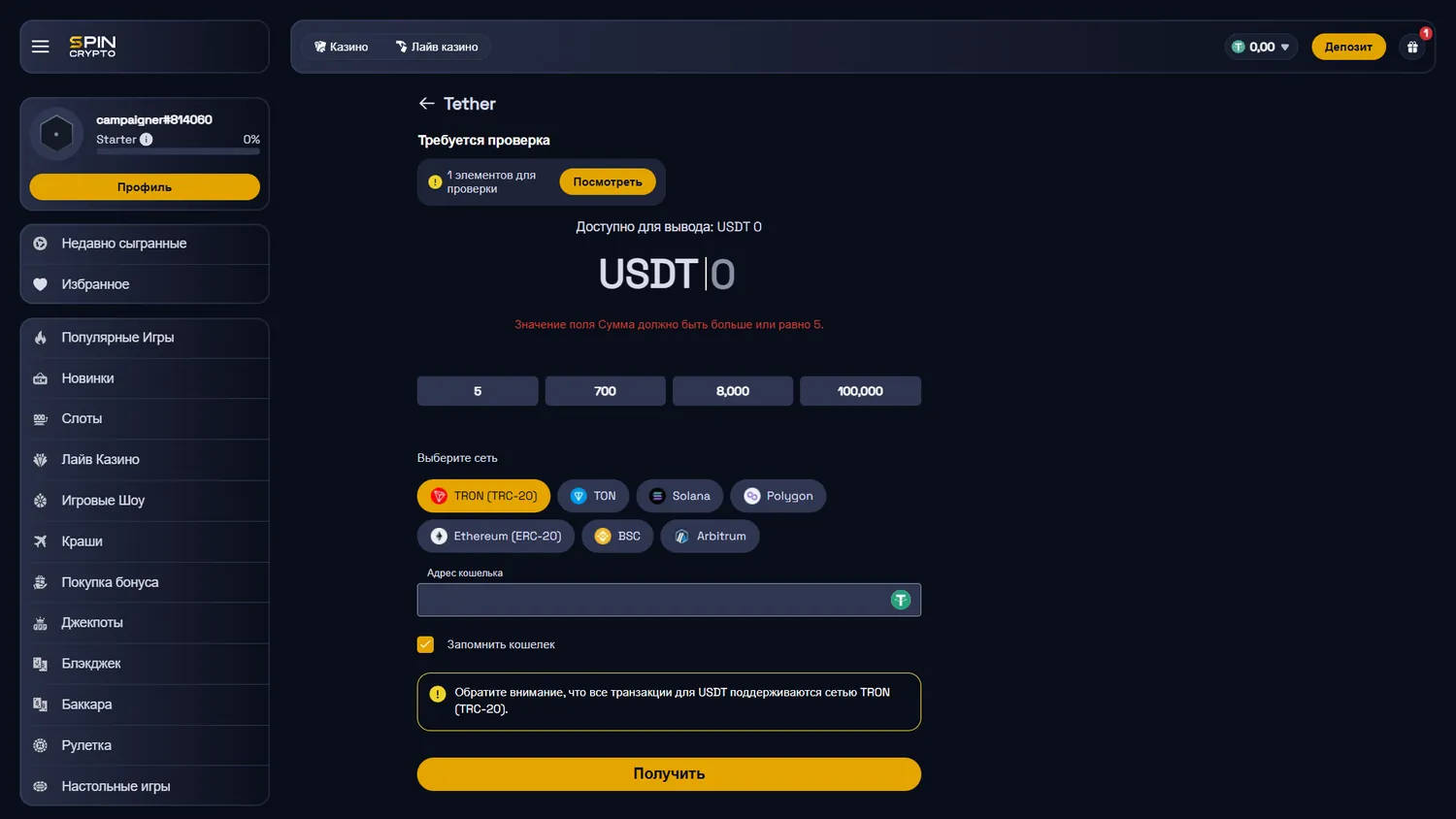
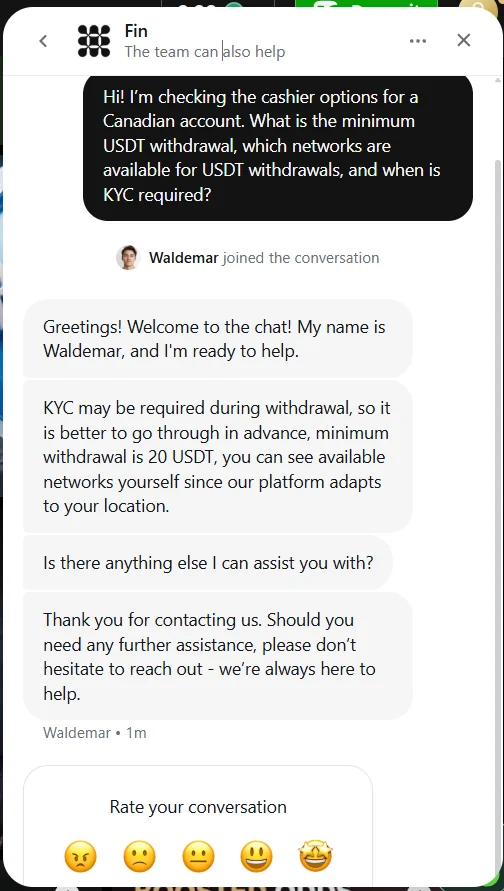
The timing differs between operators. In our checked Shuffle material, identity verification is required before the first withdrawal. The Jozz account we checked displayed a profile-completion gate before the withdrawal form became available. Fairspin support stated during our account check that KYC may be required during withdrawal, while the SpinCrypto withdrawal interface can display a verification requirement.
Pending Periods, Bonus Rules and Withdrawal Limits
Some casinos publish a pending or review period before the payment method’s own delivery time starts. Betya, for example, separates a 24-hour pending period from the later payment-method stage. A withdrawal can therefore be inside the operator’s process even when the selected method would normally settle faster after approval.
An active bonus can also stop a withdrawal. Wagering requirements, deposited-funds turnover, bonus-balance rules or cashout limits may need to be satisfied before the balance is eligible for release. If the operator rejects a withdrawal for a promotional reason, ask it to identify the exact term applied to the account rather than relying on a generic support answer.
External Payment and Network Delays
After the casino releases a payment, the remaining delay can sit with a bank, card network, e-wallet or blockchain. This is why the distinction between approved and sent matters. If the operator can provide a payment reference, the troubleshooting path moves from the casino’s internal processing to the external route.
Build a usable complaint record
What Evidence to Save Before Contacting Casino Support
A clear record makes it much easier for the operator, ADR provider or regulator to understand what happened. Save the evidence before the account status or support conversation changes.
- Account identifier: username, player ID or the email used for the casino account.
- Withdrawal reference: request ID, transaction ID or cashier-history reference.
- Amount and currency: including the crypto asset and network where relevant.
- Date and time: when the withdrawal was requested and when its status changed.
- Status screenshots: pending, rejected, approved, KYC requested or processed.
- Verification record: what the casino requested and when the documents were submitted.
- Support correspondence: relevant chat transcripts and emails, including promised timeframes.
- Terms or promotion: the withdrawal, bonus or payment rule the dispute concerns.
- External payment reference: bank/e-wallet reference or crypto TXID when the operator says the funds were sent.
Keep sensitive documents private. A public forum post normally does not need your passport, full bank statement, card number, home address or unredacted KYC file. If an ADR provider needs supporting documents, submit them through that provider’s official process.
Turn support history into a documented case
How to Make a Formal Casino Withdrawal Complaint
Live chat is useful for status checks, but a dispute should eventually become a written complaint that can be followed through the operator’s formal complaints procedure. Look in the casino’s Terms, Help, Complaints or licence information for the designated submission route.
Describe the sequence rather than making an accusation. State the withdrawal amount, request date, current status, documents already supplied and the resolution you want. If the operator says a term was breached, ask for the exact rule and the account event that triggered it.
If the operator has restricted or closed the account as well as delaying the payment, use Casino Account Locked or Closed to separate account access, deposited funds and disputed winnings.
What to Include in the Complaint
A useful complaint can usually be understood without a long narrative. Include the account identifier, withdrawal reference, amount and currency, request date, current status, KYC steps already completed, prior support contacts and the resolution sought. Attach only evidence that is relevant to the issue.
Ask for the response in writing. If the operator considers its decision final, ask it to confirm that you have reached the end of the internal complaints process and to identify the ADR provider available under its licence.
Do not invent a universal 24-hour rule
When Should a Delayed Withdrawal Be Escalated?
There is no universal rule that a withdrawal becomes a regulatory dispute after 24, 48 or 72 hours. The correct threshold depends on the casino’s published processing time, whether verification is outstanding, whether the payment has actually been sent and the complaints rules attached to the licence.
Escalation becomes more appropriate when the operator has exceeded its own stated timeframe without a clear reason, repeatedly requests the same completed step without explaining what remains outstanding, rejects the withdrawal without identifying the rule applied, or reaches the end of its formal complaint procedure without resolving the dispute.
For a regulator or ADR provider, the complaint trail matters. A series of short live-chat messages may show that contact occurred, but a formal written complaint with dates, references and a requested resolution gives the next reviewer a much clearer record.
The licence controls the escalation path
Where to Complain About a Casino Withdrawal
The licence determines the official escalation route. First verify which legal entity and licence actually cover the casino domain. Do not assume that a logo in a footer proves current licensing; use the regulator’s public licence information or interactive seal where available.
The JacksClub dispute evidence illustrates why the operator's Terms and the applicable regulator complaint procedure must be checked separately: their stated timelines differ.
Licensed somewhere else? If the casino is licensed in another jurisdiction, use that regulator’s official complaint and dispute-resolution procedure rather than applying one of the four routes below.
UK Gambling Commission (UKGC)
For a UKGC-licensed operator, complain to the gambling business first. The entire internal complaints process must take no longer than eight weeks, although it can end earlier if the operator reaches a final or deadlock position. If the gambling transaction dispute remains unresolved, the operator must tell the customer how to take it to its approved Alternative Dispute Resolution provider. The ADR route is free to the customer. The UK Gambling Commission’s ADR guidance explains the player route.
The UK Gambling Commission supervises licence compliance but does not resolve individual gambling transaction disputes itself. If the issue points to a wider regulatory breach, information supplied to the Commission can still be relevant to its supervisory work.
Malta Gaming Authority (MGA)
An MGA-authorised operator must make its complaint procedure available to players. Current MGA guidance says the operator should investigate a complaint and inform the player of the result within ten days; if more time is needed, this can be extended by a further ten days with notice and reasons.
For an unresolved gambling transaction dispute, the operator must provide access to its engaged ADR entity. MGA distinguishes a dispute — a disagreement between a player and the B2C operator — from a complaint that gaming services may be unlawful, unsafe, unfair or non-transparent. The Player Support Unit can receive those regulatory complaints, but the MGA does not decide the merits of the player-operator transaction dispute; that function is reserved for ADR. B2C operators must engage an ADR entity, the ADR service offered through that arrangement must be free to the player, and an operator has 20 days to comply with an ADR decision made in the player’s favour. The MGA’s Player Protection guidance explains the complaints-and-disputes framework. For conduct that may raise a regulatory complaint, the Authority also provides an official MGA complaint form.
Curaçao Gaming Authority (CGA)
Under the current Curaçao framework, the starting point is the licensed operator’s formal complaints process. For ordinary complaints, the current CGA framework gives the operator up to four weeks to assess and respond, with one additional four-week extension possible for complexity or incomplete information when the player is notified in writing. The complaints framework also requires access to certified ADR.
If the internal complaint remains unresolved, use the certified ADR provider identified by the operator. CGA rules require B2C operators to tell players which certified ADR entity is available, and the operator bears the ADR cost.
The CGA itself is not the tribunal for an individual withdrawal dispute. It states that it cannot mediate or arbitrate between player and operator and cannot order compensation. A report to the CGA is still appropriate where the facts may indicate a breach of licence conditions, such as a failure to maintain the required complaints or ADR process. The regulator’s online-gaming complaints guidance explains this boundary.
Anjouan Gaming Authority
Anjouan’s current player-complaint policy also starts with the operator. For account disputes, including payments, suspensions and bonuses, the complaint must be submitted through the operator’s prescribed route within 30 calendar days of the relevant incident. The licensed operator then has 30 calendar days to investigate and respond. The Anjouan player complaint policy sets out this process.
If the dispute is still unresolved after the operator process, it can be escalated to an approved ADR provider. Anjouan Gaming publishes its authorized ADR providers and requires licensed operators to participate in the ADR framework, with the operator bearing the cost.
The Authority says it does not handle, mediate or adjudicate individual player disputes. It can, however, use reports about possible licence breaches for regulatory oversight.
Different channels have different powers
ADR, Regulators and Casino Complaint Services: What Is the Difference?
| Route | What it can do | What it usually cannot do |
|---|---|---|
| Casino support / complaints team | Review the account, payment, KYC and operator terms and issue an internal decision. | Provide independent adjudication of its own decision. |
| ADR provider | Independently review an eligible dispute after the internal process, under the relevant licence framework. | Act as a gambling regulator or law-enforcement body. |
| Gaming regulator | Supervise licence compliance and take regulatory or enforcement action where its powers allow. | Automatically act as a personal debt-recovery service for every player dispute. |
| Third-party complaint service | Offer mediation or public complaint handling where the service accepts the casino and case. | Exercise government enforcement powers or replace an official ADR route. |
Services such as Casino Guru and AskGamblers operate complaint or mediation systems, but they are not gambling regulators. They may be useful as an additional mediation route where they accept the operator and dispute. If the casino’s licence provides a formal ADR process, keep that official route separate from third-party mediation.
TXID separates operator-side and network-side issues
Crypto Withdrawal Sent but Not Received
A crypto withdrawal has a useful dividing line: the transaction hash. If the casino still shows the withdrawal as pending and no TXID exists, the payment may still be inside the operator’s process. If the casino says it has sent the withdrawal and provides a valid TXID, the next checks move to the blockchain and receiving wallet.
How to Check a Crypto Withdrawal Transaction
- Confirm the asset. Make sure the withdrawal is the expected coin or token.
- Confirm the network. TRC20, ERC20, Solana, TON and other routes are different networks.
- Get the transaction hash. Ask the operator for the TXID if it is not displayed in the cashier.
- Check the transaction on the appropriate blockchain explorer. Confirm whether it is pending, confirmed or failed.
- Compare the destination address. It should match the receiving wallet or exchange deposit address used for the withdrawal.
- Check the receiving service. An exchange can require additional network confirmations before crediting a balance even after the blockchain transaction is confirmed.
If the transaction was sent to the wrong network or address, recovery can be difficult or impossible depending on the wallet and chain. Contact the receiving wallet or exchange through its official support route and provide the TXID; do not give anyone your seed phrase or private key.
Avoid losing money twice
Recovery Scams, Release Fees and Fake Withdrawal Help
People who are already worried about missing money are attractive targets for a second scam. Fraudsters may contact a player through social media, messaging apps, search ads or email and claim they can recover a casino or crypto withdrawal for an upfront fee.
Warning signs include an unsolicited “recovery agent”, guaranteed recovery, claims of secret access to an exchange or regulator, requests to pay a tax or release fee to a third party, requests for a seed phrase or private key, requests for remote access to a device, or pressure to send more cryptocurrency before the supposedly recovered funds can be released.
Consumer-protection and law-enforcement agencies have repeatedly warned about refund and cryptocurrency-recovery scams that charge upfront fees or impersonate official organizations. The FTC’s recovery-scam guidance warns against paying someone who unexpectedly promises to recover lost money for a fee, while the FBI’s cryptocurrency recovery-fraud notice states that private recovery companies cannot issue seizure orders for cryptocurrency.
This does not mean every lawyer, ADR provider or professional adviser charging for legitimate work is fraudulent. Verify who the person or organization is, use contact information published independently by the regulator or professional body, understand the fee agreement, and be especially cautious when someone contacts you first and promises a guaranteed result.
A short factual complaint is easier to review
Casino Withdrawal Complaint Template
Keep the first formal complaint factual and easy to verify. Replace the brackets with the details from the account.
Subject: Formal Withdrawal Complaint – [Withdrawal ID]
Hello,
I am submitting a formal complaint regarding withdrawal [ID/reference] for [amount and currency], requested on [date and time].
The current withdrawal status is [pending / rejected / approved / processed]. The payment method is [method, and crypto network if applicable].
I have already completed or supplied the following requested account checks: [brief list]. I contacted support on [dates], and the responses were [brief factual summary].
Please confirm the specific reason for the current status, identify any remaining action required from me, and provide the expected resolution or payment timeframe. If the withdrawal has already been sent, please provide the external payment reference or transaction ID.
If this is your final response and the complaint remains unresolved, please confirm that the internal complaints procedure is complete and provide the details of the ADR provider available for this dispute.
Requested resolution: [payment of the approved withdrawal / written explanation of the rejection / another specific outcome].
Regards,
[Account name or player ID]
Do not include more sensitive information than the operator needs. Use the casino’s official account, complaint form or verified support address rather than sending identity documents to an address supplied by an unknown third party.
Withdrawal troubleshooting questions
Casino Withdrawal Problems FAQ
How long can a casino withdrawal stay pending?
There is no single limit that applies to every casino. Compare the elapsed time with the operator’s published withdrawal and complaint procedures. A pending period can include account review or KYC before the payment method’s external processing begins.
Why is a casino asking for KYC before withdrawal?
Operators can use identity, address and payment-method checks as part of their compliance process. The exact request depends on the operator and account. Submit documents only through the casino’s official verification channel and keep a record of what was requested and when it was supplied.
What should I do if a casino rejects my withdrawal?
Ask for the reason in writing and the exact term or account condition used for the decision. Save the withdrawal record and relevant support messages. If the explanation does not resolve the issue, use the operator’s formal complaint procedure and then the ADR route available under its licence.
What if the casino says the withdrawal was sent but I have not received it?
Ask for the external payment reference. For crypto, request the TXID and check the transaction on the correct blockchain. For banks, cards or e-wallets, use the operator’s payment reference when contacting the receiving provider.
Where can I complain about an online casino?
Start with the casino’s formal complaints process. If it remains unresolved, follow the ADR process required by the licence. A regulator may also accept reports about possible licence breaches, but the regulator’s role is not always to decide the individual money dispute.
What is casino ADR?
Alternative Dispute Resolution is an independent process used to review eligible disputes between a player and operator after the casino’s internal complaint procedure. The exact provider, eligibility rules and effect of the decision depend on the licensing framework.
Can a gambling regulator force a casino to pay me?
It depends on the regulator’s legal powers and the type of issue. Some regulators supervise compliance rather than adjudicating individual transaction disputes. That is why the operator’s ADR provider is often the relevant route for a specific withdrawal dispute.
Should I use a casino or crypto recovery service?
Be cautious, especially with unsolicited services that promise guaranteed recovery or ask for an upfront crypto payment, seed phrase, private key or remote device access. Verify any adviser independently. Use the operator, official ADR and regulatory routes before trusting an unknown recovery service.