
—
Casino verification · Documents · Rejections · Withdrawals
Casino KYC Verification: Documents, Rejections & Withdrawals
If a casino asks you to verify an account, the useful question is not only “what is KYC?” It is: what exactly do they need, what has to match, why was a document rejected, and what should you do next? Use the document table and problem solver below before sending the same files again.
KYC approved does not mean a withdrawal is approved. Identity verification can be complete while a payment remains in a separate transaction, security, bonus or payment-provider review.
Get the main answer first
Casino KYC Documents: What to Send and What It Proves
Use the casino’s current request as the final authority. The table below is a troubleshooting map: it shows what each request is normally trying to establish, what must line up, and the first question to ask if the upload is rejected.
| Request | Typical evidence | What must match | Common rejection | Ask if rejected |
|---|---|---|---|---|
| Identity | Operator-accepted passport, ID card, driving licence or residence document | Legal name, date of birth, validity and visible document details | Expired, cropped, blurred or account name mismatch | “Which field or document rule failed?” |
| Proof of address | Accepted bank statement, utility bill or official correspondence | Name, current residential address and the operator’s date window | Old address, unsupported document, missing date or unreadable details | “Which address field or document type is not accepted?” |
| Payment method | Masked card evidence, bank/e-wallet ownership or transaction proof requested by the operator | Account holder, payer identity and the route actually used | Payer differs from player, wrong screenshot or missing transaction context | “Do you need ownership proof, transaction proof, or both?” |
| Crypto wallet | Only the wallet or transaction evidence specifically requested | Asset, network, address/transaction context and account link where required | Wrong network, incomplete transaction evidence or unrelated wallet data | “Which transaction/address detail is still missing?” |
| Selfie / liveness | In-app selfie, live capture or video step | Face, ID and the operator’s capture instructions | Glare, poor framing, expired ID or failed live capture | “Should I repeat the capture or upload a different ID?” |
| Source of Funds | Evidence connected to the stated source of the money being reviewed | The source, relevant transaction/period and account context | Evidence does not explain the funds the operator asked about | “Which transaction or period must the evidence cover?” |
| Source of Wealth | Evidence relevant to how overall wealth/assets were acquired | The scope of the SOW request and the source categories being reviewed | SOF evidence sent for a broader SOW request, or scope remains unclear | “Is this SOF or SOW, and what scope do you need?” |
CasinoOfficialSite never accepts your KYC documents. Do not send us passports, statements, card images or wallet credentials. Never provide a seed phrase, recovery phrase, private key, wallet password, card PIN or CVV to a casino verification request.
Start with what went wrong
Run the Casino KYC Problem Solver
Select the state closest to your situation. The tool does not collect account data or documents; it tells you the next check, what not to resend blindly, what evidence to keep and when the issue has moved beyond KYC.
Choose what happenedWe will turn the status into a next action.
—
—
—
—
—
The process is usually layered
How Casino KYC Works Step by Step
KYC (Know Your Customer) is the account-verification process used to establish who controls an account and, depending on the operator and applicable rules, verify age, identity, address, payment ownership or financial-source information.
1RequestOperator identifies the check
→2SubmitUse the official route
→3ReviewAutomated or manual
→4DecisionApproved / rejected / more info
→5Next stateAccount or payment continues
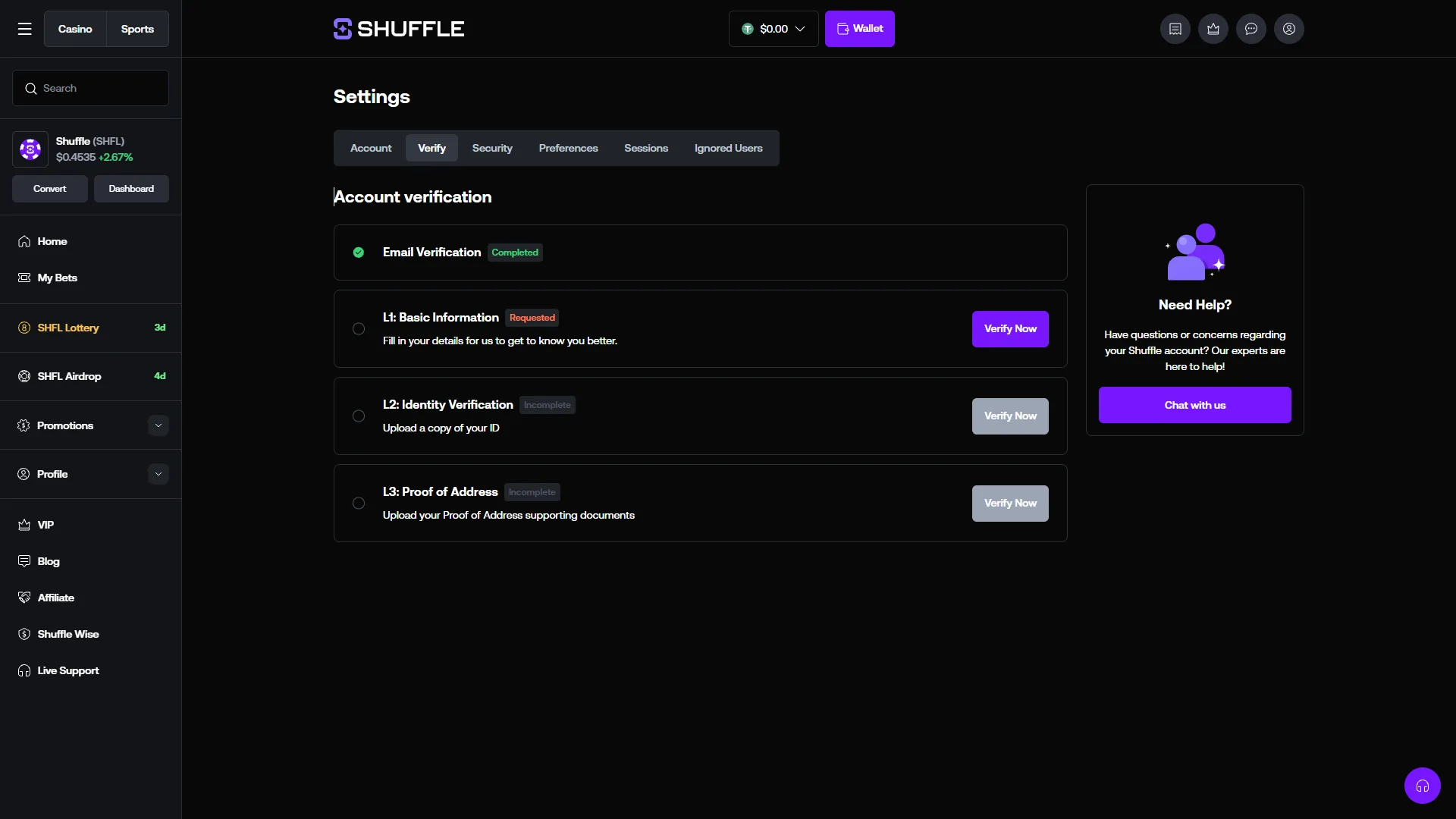
A casino can separate verification into several layers rather than one pass/fail check. Our Shuffle account, for example, showed Email Verification, L1 Basic Information, L2 Identity Verification and L3 Proof of Address as separate account states.
The Flush AML/KYC evidence documents policy-level CDD triggers, including a withdrawal request regardless of amount, which is distinct from the sign-up experience.
When can KYC happen?
The timing depends on the operator and licence. For UKGC-licensed remote operators, identity information must be obtained and verified before the customer is permitted to gamble. Other licences and offshore operators can use different onboarding and withdrawal workflows, so do not apply the UK rule universally. UKGC rule ↗
Basic identity, then sometimes live capture
Identity Verification: ID, Selfie and Liveness
Identity verification connects the account to a person and the personal details entered at registration. The operator’s accepted-document list matters more than a generic checklist: a genuine document can still be rejected if the route does not accept that type or if the submitted image hides required details.
A nickname, missing surname, old address or inconsistent transliteration can be enough to create a mismatch even when the document is genuine. A selfie request by itself is not proof that the operator suspects fraud.
A separate check from identity
Proof of Address: What Must Match
The operator is trying to match the residential address in the casino profile with an accepted source that shows the player’s name and current address. Bank statements, utility bills and official correspondence are common examples, but accepted document types and age limits belong to the specific casino.
Account has an old addressCorrect the profile through the operator’s allowed process before uploading conflicting evidence.
Statement is rejectedAsk whether the problem is document type, issue date, missing name/address, crop/quality or file format.
Your bank cannot produce the requested fieldDo not fabricate or edit a document. Ask support for an accepted alternative and keep the bank/support reply.
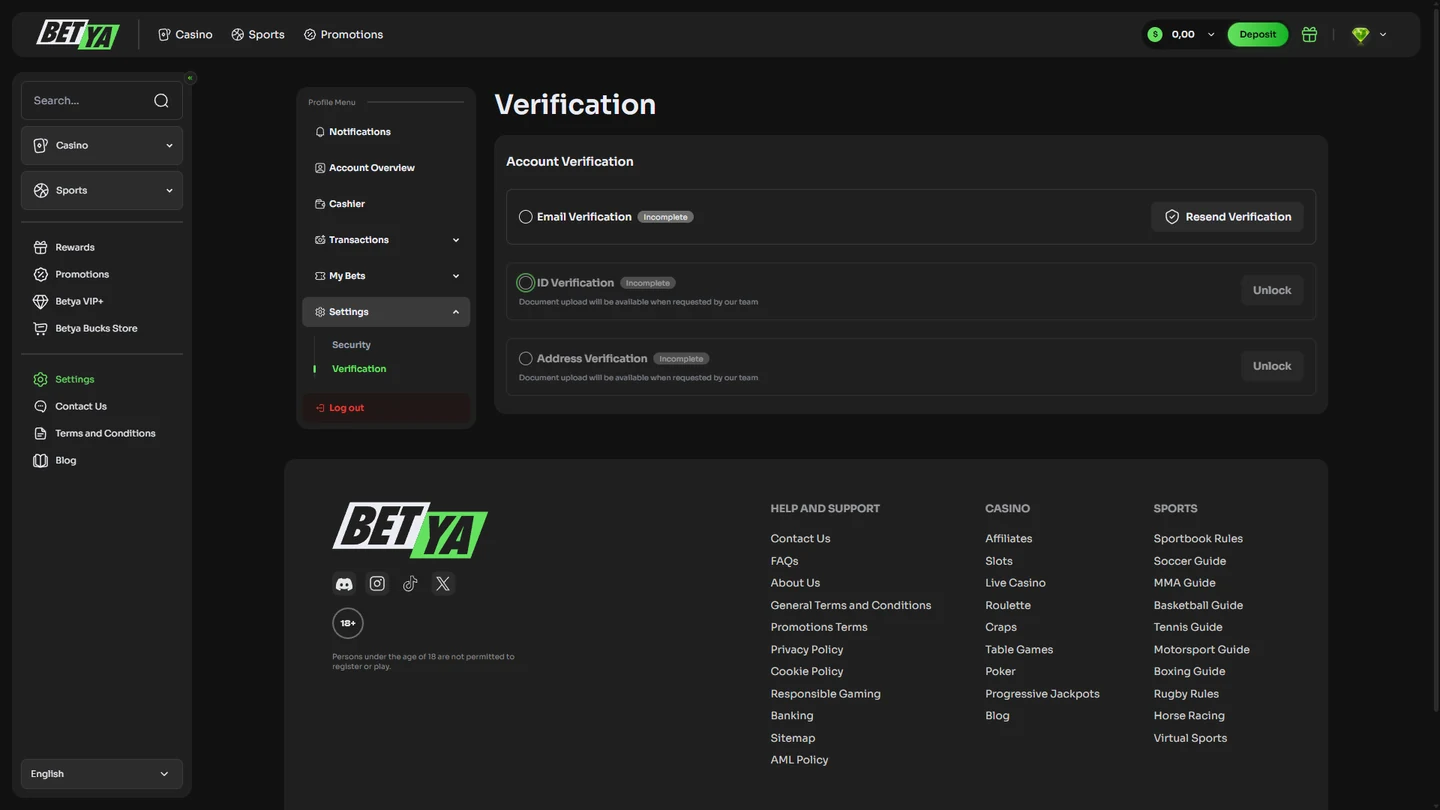
Do not turn Betya’s current three-month proof-of-address rule into a universal casino rule. Another operator can publish a different document list or date window.
Identity KYC may already be complete
Payment Method and Crypto Wallet Ownership
A payment check asks who controls the card, bank account, e-wallet or wallet route connected to the deposit or withdrawal. That is why “my passport is already verified” may not answer a later request for payment evidence.
Card / bankClarify whether the operator needs account ownership, a transaction record or both. Follow its masking instructions; never expose PIN or CVV.
E-walletCheck that the evidence shows the account holder and the payment/transaction detail actually requested.
CryptoMatch the asset, network and transaction context. No legitimate verification requires a seed phrase, recovery phrase or private key.
Do not treat these as synonyms
Source of Funds vs Source of Wealth
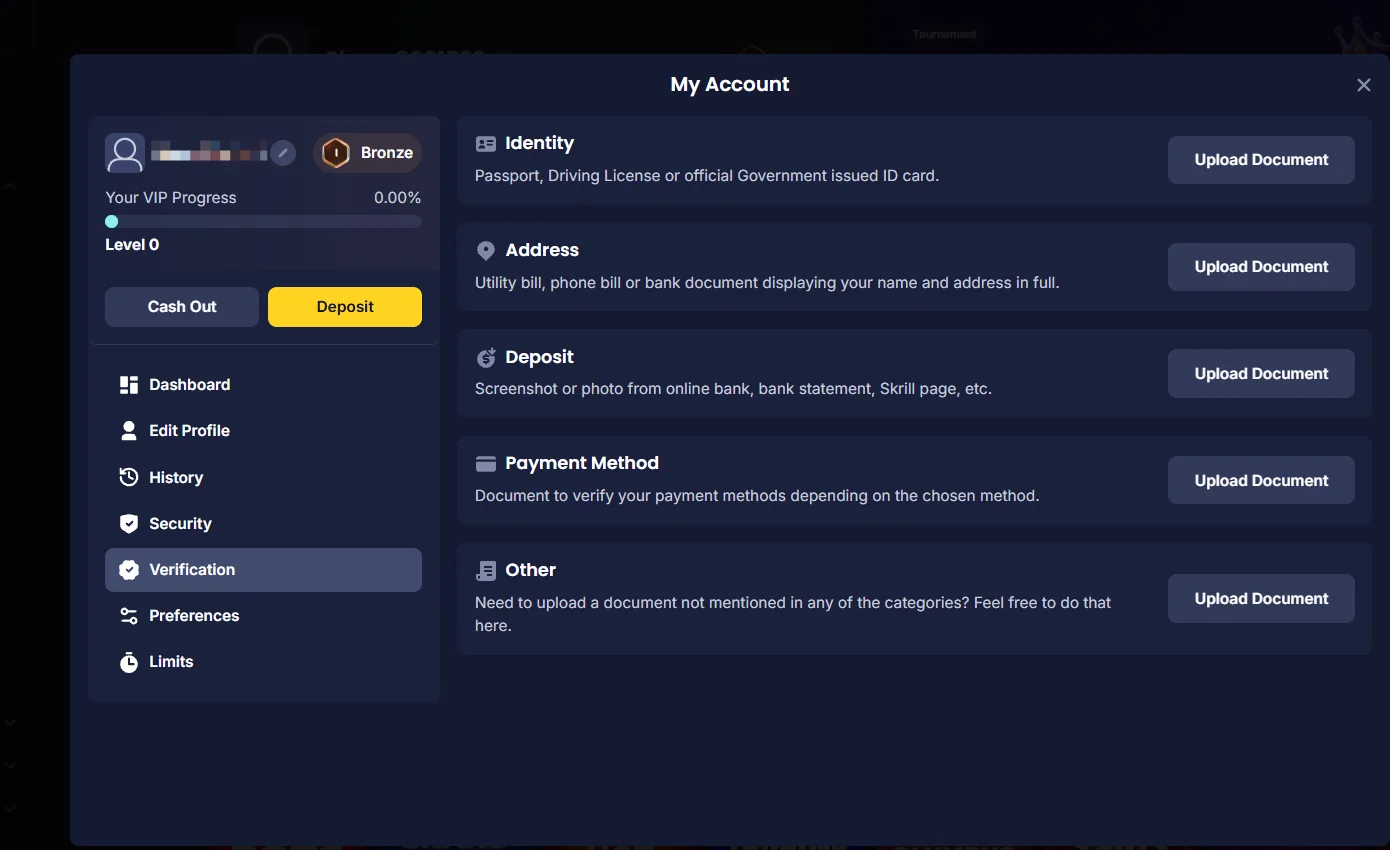
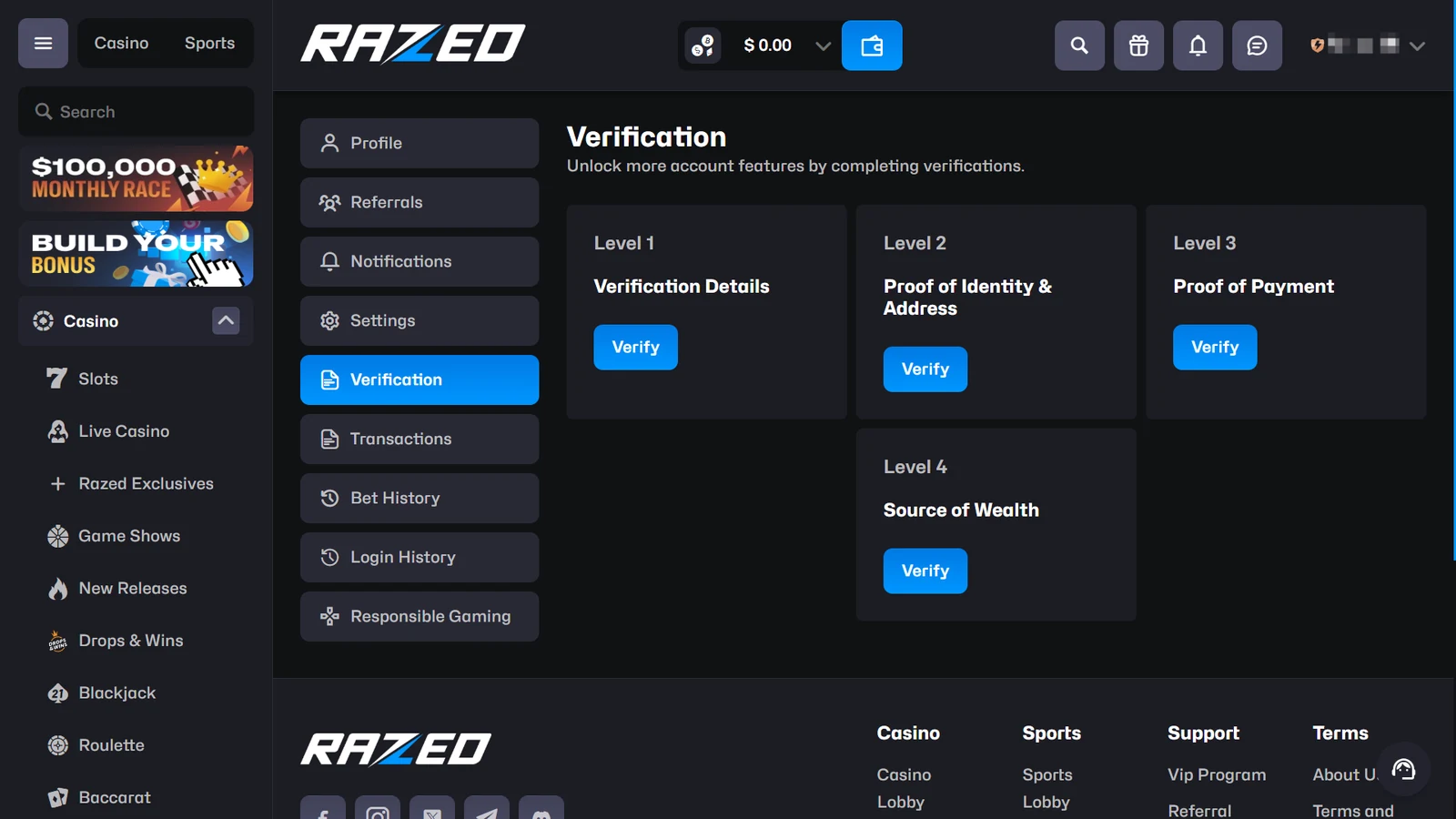
Source of Funds (SOF) concerns where money used for a particular transaction or set of transactions came from. Source of Wealth (SOW) concerns the origin of a person’s overall body of wealth. They can involve related evidence, but they answer different questions.
If the request simply says “financial documents,” ask the operator to identify whether it is SOF or SOW, which transactions or period it covers, and which evidence categories are acceptable. Do not guess at a universal threshold: the trigger and scope depend on the operator and regulatory context.
UKGC guidance uses the same distinction between SOF and SOW; we use it here as a regulatory example, not as a universal rule for every casino licence. UKGC glossary ↗
There is no single casino-industry clock
How Long Does Casino KYC Verification Take?
The only useful timeframe is the one published by the operator for the type of review you are actually in. An electronic identity check can finish quickly, while manual document review, re-submission, payment ownership or SOF/SOW can create a different queue. If the operator asks for another document, the review may effectively start again for that unresolved item.
Its help centre says verification usually takes a few minutes, while some cases need more time.
Open sourceIts player-protection page says document review normally takes no longer than 24 hours.
Open sourceIts help centre states 24–48 hours after all requested documents are received, with longer handling possible for additional checks.
Open sourceThese are examples, not an industry average. If your casino publishes a target, compare your elapsed time with that exact target and ask support whether the case is still ordinary document review or has moved to an additional/manual check.
Fix the failed field, not the whole account at random
Why Casino Verification Gets Rejected or Requested Again
“Verification failed” is not specific enough to act on. Before sending another file, get the operator to identify the document category or data point that remains unresolved.
| Error / request | Likely issue | What to check now | What to ask support |
|---|---|---|---|
| ID rejected | Expired/unsupported ID, crop, glare, blur or profile mismatch | Validity, all edges, readable data, legal name and DOB | “Was the failure document quality, type or account data?” |
| Address rejected | Old address, missing issue date/name, unsupported statement or wrong date window | Profile address, document date, full name/address and accepted types | “Which address field or rule failed?” |
| Payment proof rejected | Ownership is visible but transaction detail is missing, or vice versa | What route was used and what exact fact the upload proves | “Do you need ownership proof, transaction proof, or both in one file?” |
| Asked for KYC again | Different layer is open: address, payment, SOF/SOW or a later legal/risk trigger | Compare the new request with the item already marked approved | “What remains unresolved after the earlier verification?” |
| Requested document cannot be produced | Bank/e-wallet format does not contain the exact field requested | Confirm with the provider what official alternatives exist | “Will you accept this alternative statement/confirmation from the provider?” |
| Country / VPN mismatch | Registration, normal location and account data do not line up | Account country, residential data and the operator’s location rules | “Which country/location field needs to be resolved?” |
Do not edit a bank statement or create a field your provider does not issue. If a requested document is impossible to generate, keep the bank/e-wallet support response and ask the casino for an accepted alternative.
Verification and payment approval are different states
KYC Before a Withdrawal: What It Does and Does Not Mean
Once KYC is approved, a withdrawal can still be waiting for operator review, bonus/turnover checks, payment-method validation, fraud/security controls, payment-provider processing or external settlement. That is why the status after verification matters more than repeatedly resending identity documents.
If access is restricted or an account is closed while funds remain unresolved, follow Casino Account Locked or Closed to document the account decision separately from the money.
1KYC pendingResolve the requested item
→2KYC approvedIdentity/compliance state closes
→3Withdrawal reviewSeparate transaction state
→4Payment sentExternal settlement can follow
For UKGC-licensed operators, the regulator says a withdrawal request must not become a new information hurdle where the operator could reasonably have asked for that information earlier, while later information can still be requested when another legal obligation arises. That is a UK-specific regulatory example. UKGC Licence Condition 17.1.1 ↗
Sensitive evidence belongs only in the verified operator route
How to Submit Casino KYC Documents Safely
Open the casino through a route you trust and confirm the domain before signing in.
Know whether the open item is identity, address, payment, SOF or SOW.
If the provider cannot generate a requested field, ask for an accepted alternative instead of editing a statement.
Never expose PIN, CVV, seed phrase, recovery phrase, private key or wallet password.
Save the request text, upload status, date, case/ticket ID and operator reply.
If KYC is approved but payment is still stuck, switch to withdrawal troubleshooting.
Know when the problem has changed
When KYC Becomes a Withdrawal Problem
If requested documents are still under review, the immediate issue is verification. Compare the elapsed time with the operator’s own published target, save the upload status and ask which item remains open.
If KYC is marked complete but the withdrawal is still pending, rejected or unpaid, stop treating it as an identity-document problem. Record the transaction status, request ID, amount, method and timestamps and move to the withdrawal workflow.
Casino KYC FAQ
Casino KYC Verification FAQ
What documents can a casino ask for?
Depending on the open check, a casino can ask for an accepted identity document, proof of address, payment-method evidence, a selfie/liveness step or financial evidence for SOF/SOW. The current operator request determines the exact acceptable evidence.
Why was my proof of address rejected?
Common causes include a profile/address mismatch, missing name or issue date, an unsupported document type, a file outside the operator’s date window, or unreadable/cropped evidence. Ask which specific rule failed before resubmitting.
Can a casino ask me to verify my payment method after my ID is approved?
Yes. Identity and payment ownership are different checks. The operator may need evidence that the card, bank account, e-wallet or other route belongs to the account holder or is otherwise permitted.
Do crypto casinos require KYC?
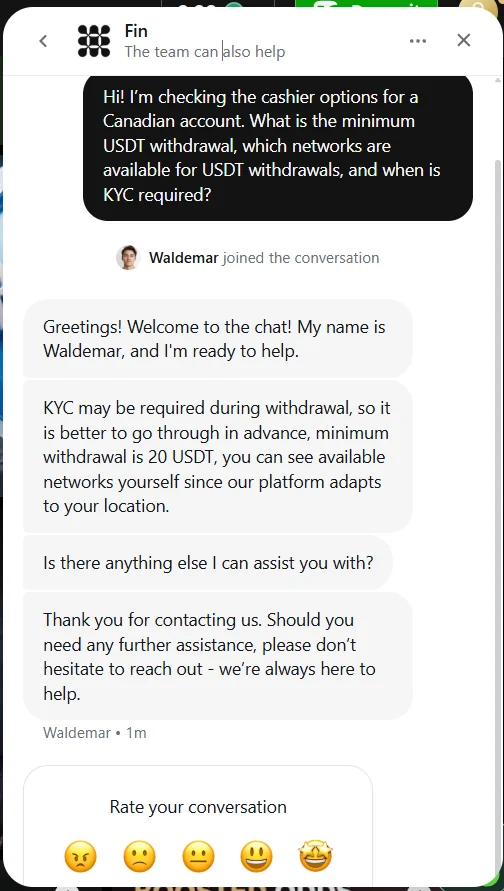
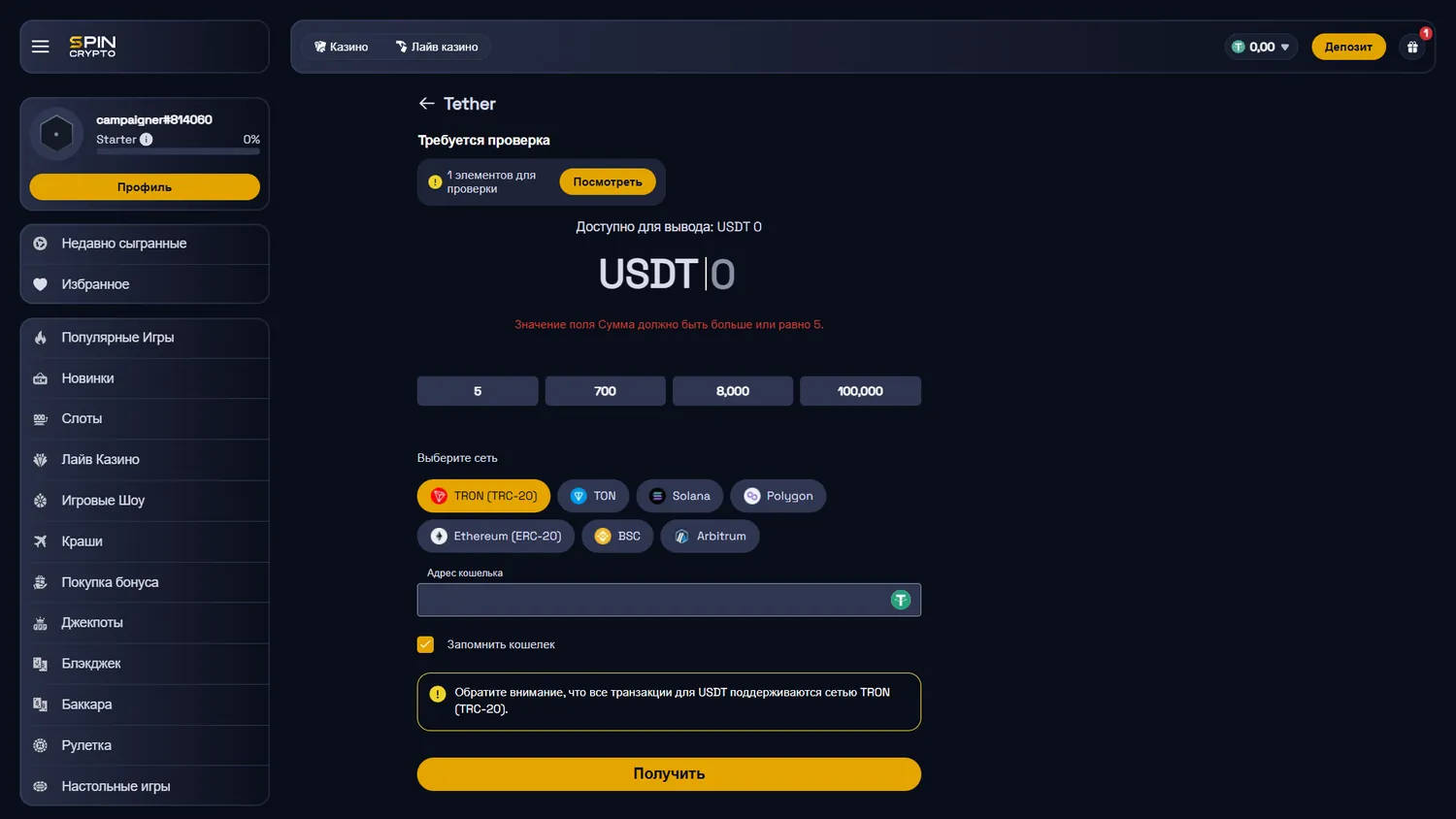
Crypto payments do not prove permanent no-KYC access. Our SpinCrypto and Fairspin evidence shows verification can appear during a crypto withdrawal journey, while Cashy and Shuffle expose verification controls alongside crypto support.
What is the difference between Source of Funds and Source of Wealth?
Source of Funds concerns where money used for a transaction came from. Source of Wealth concerns how a person’s overall body of wealth was acquired. Ask the operator which scope it is requesting.
How long does casino KYC take?
There is no universal timeframe. Operator-published examples range from a few minutes for some verification flows to 24 hours or 24–48 hours for document review, with additional/manual checks taking longer. Use the timeframe published by your casino for your current review.
Why is the casino asking me to verify again?
The new request may cover a different layer such as address, payment ownership, SOF/SOW, or a later legal/risk trigger. Compare it with the item already approved and ask exactly what remains unresolved.
Does completed KYC mean my withdrawal is approved?
No. KYC can be complete while the withdrawal remains in a separate operator, bonus, security, payment-provider or settlement stage.
What should I do if KYC is approved but my withdrawal is still pending?
Stop resending identity documents unless the casino opens a new specific verification request. Save the withdrawal status, request ID, amount, method and timestamps, then use our Casino Withdrawal Problems guide to troubleshoot the payment stage.
Use the right page for the right stage
Before depositing, use How to Check an Online Casino Before You Deposit. For cashier routes, networks and minimums, use Casino Payment Methods & Withdrawals. For the evidence standards behind our account checks, see How We Verify Casino Information.